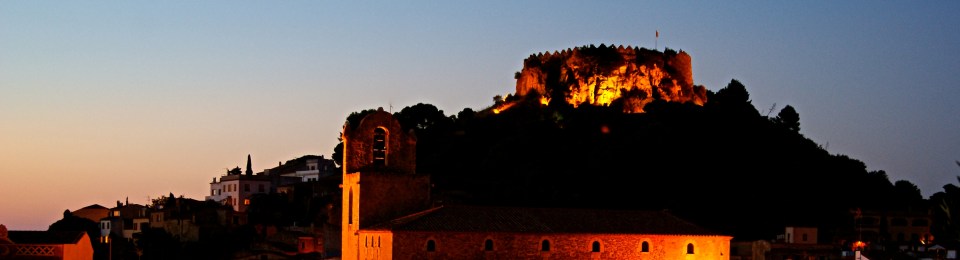
The Tourist Board’s slogan is perfect. Begur, és autèntic.
Begur is a real place. It’s authentic. It’s not simply a holiday destination which becomes a ghost town from October to March. This is a place where Catalan people live and work. They have enormous pride in their village, as is demonstrated by constant efforts to improve a place which seems, to us, already perfect.
Stroll through the cobbled streets and get a feel of what Spain was like in the Middle Ages. But don’t walk fast — stop to 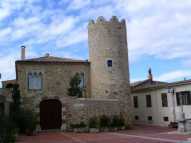 appreciate the tiny detail on townhouses and shops. There’s a mural here, a lovely bit of carving over there. The castle overlooks it all, in stately majesty. But the best feature is, I think, the watchtowers scattered all over the town and on the roads down to the beaches. These were built in the 16th and 17th century to defend villagers against attacks by Moorish pirates.
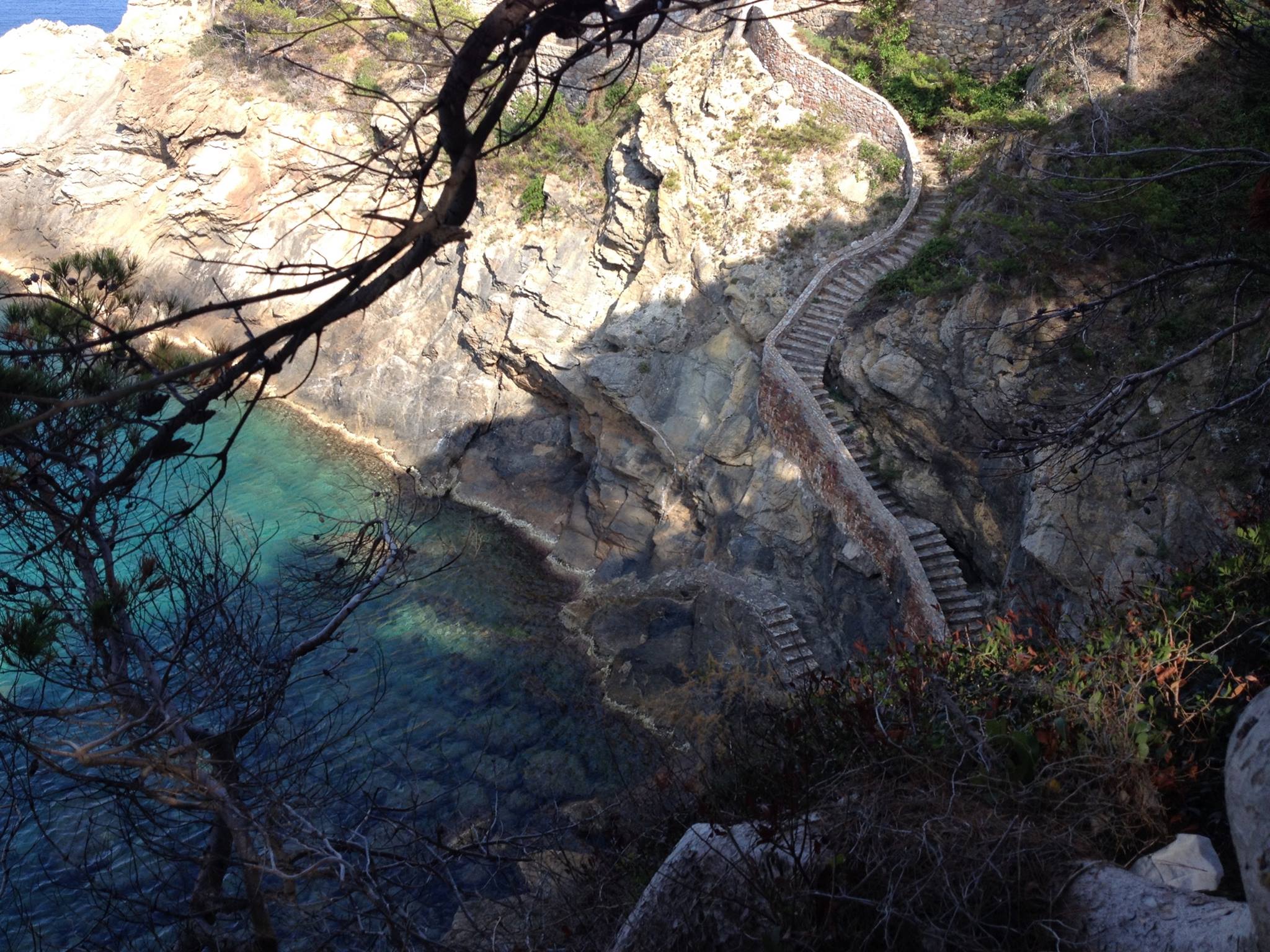
Hugging the coastline is a rugged path (now paved) once used by smugglers — the Cami Ronda. For some people, it’s a nice (if challenging) way to get to a secluded beach. For others, it’s just something nice to gaze at from afar.
Back in the 16th century, the town was important in the coral trade. That industry crashed when the Phylloxera bacteria killed off the coral. Local entrepreneurs then turned to the sea, forging trade links with countries across the Atlantic, in particular Cuba. A yearly festival — the Fira d’Indians — celebrates the links with Cuba and the Caribbean.
We think there’s no nicer place on the Spanish coast. The Costa Brava (meaning rugged coast) is one of the most beautiful, pollution-free areas that still exist on the Mediterranean. The rocky coves like Aigua Xelida, Sa Tuna, Sa Riera, Platja Fonda and Aiguablava are breathtakingly beautiful.
Travel inland and discover a collection of perfectly preserved mediaeval villages like Pals, Peratallada, Torroella de Montgrí and Palau-Sator. To get to these little gems, you cross rice fields, lavender and sunflower plantations. The area gets enough rain to ensure that, for most of the year, the roads are bordered with wildflowers like poppies and daisies.
The climate is superb. It’s never baking hot like further south in Spain; there’s always a lovely breeze coming from the sea. The spectacular coast is always visible, but the colour of the water and the sky change with time of day and season of the year. If you visit, make sure you rise early one morning to witness the spectacular sunrise over the Mediterranean. And make sure you climb up to the castle to see that stunning sunset and 360-degree view. For half the year, snow on the majestic Pyrenees provides a particularly delightful background to that view.
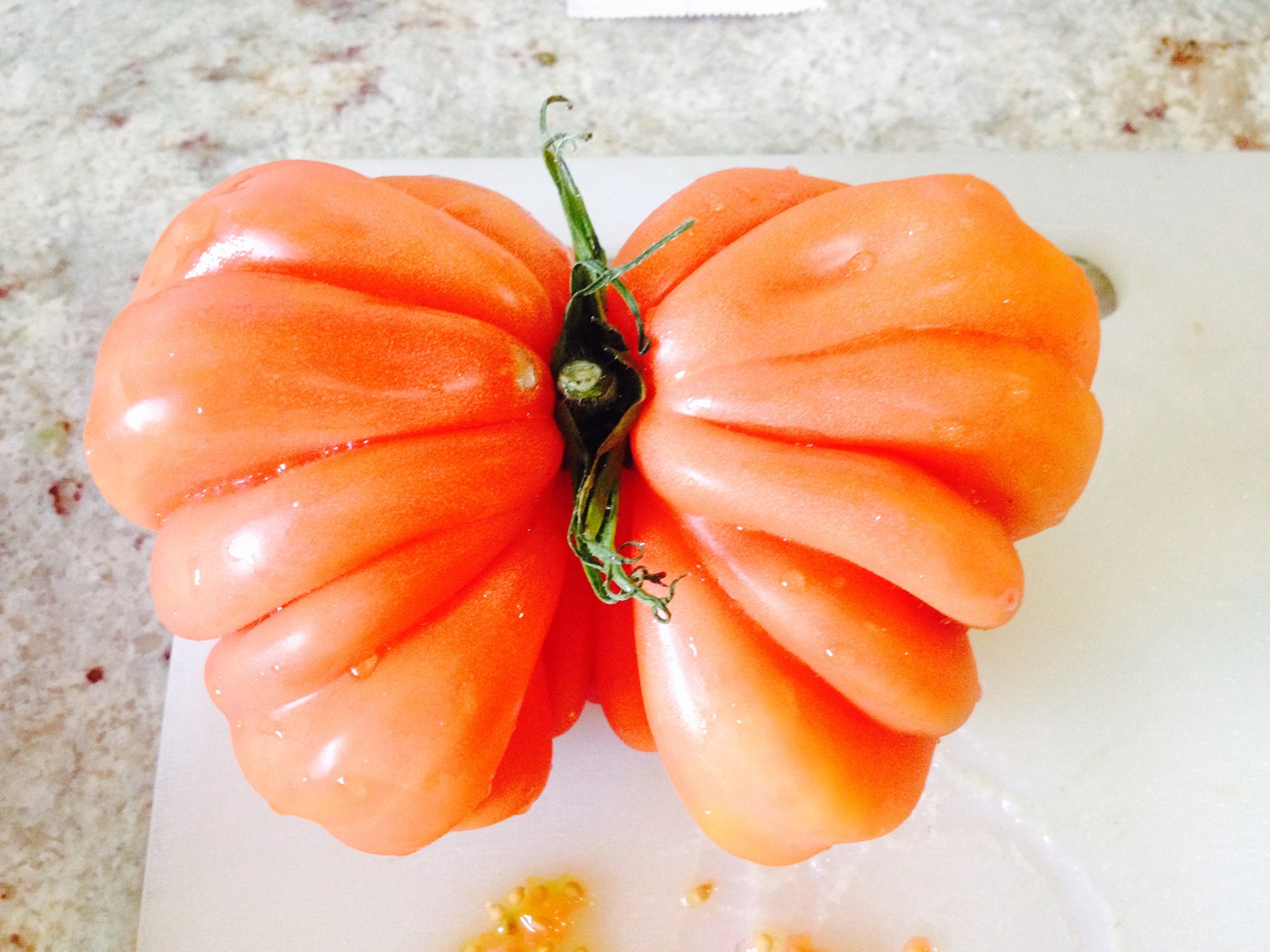
This is a tomato. Yes, it’s a tomato.
The local produce, cuisine and wines are superb. It is impossible to get a bad meal in Begur. The local people — proud, energetic and super-friendly — are professional enjoyers of life who need only the slightest encouragement to have a fiesta. In 2008, 2010 and 2012, we had the pleasure of sharing the excitement of the locals as a rampant Spanish team won the World Cup, sandwiched by two European Championships. Each time, when the final whistle blew, a conga line formed around the cathedral in the central square. During the summer, there’s music of some type — classical, jazz, flamenco — in the square almost every evening. In addition, local artists, craftsmen, cheese makers, vintners and bakers come to sell their unique wares. Children run around in carefree abandon, while parents sit in the sun, enjoy a drink and watch the world go by.
Begur has been compared to the Cap d’Antibes, the Côte d’Azur and the Amalfi Coast. But we’ve been to those places and found that they did not live up to the hype. We prefer our hidden gem on the Costa Brava.
 Casa Buena Vista